
Handheld Printers
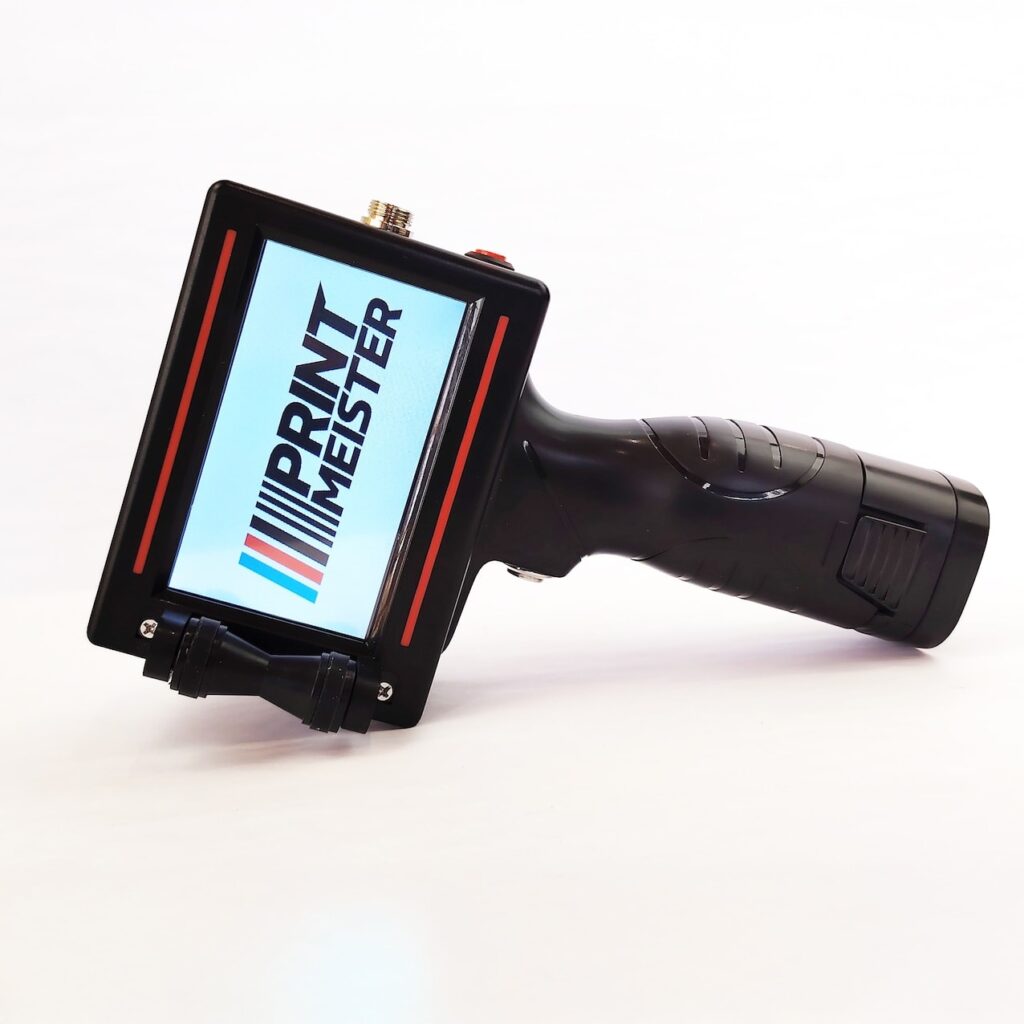
Handheld printers are portable coding and marking devices used to print information such as dates, batch numbers, barcodes, logos, and text directly onto products, cartons, and packaging — without needing a fixed production line system.
They are ideal for on-the-go printing, warehouse use, and low-volume or irregular marking tasks where a full industrial printer setup is not practical.
How Handheld Printers Work
A handheld inkjet printer works by using a cartridge-based printhead system that ejects microscopic ink droplets onto a surface.
There are two common mechanisms:
- Thermal inkjet (TIJ): tiny heating elements rapidly heat ink in the cartridge to form a bubble that ejects a droplet
- Piezo-based systems (less common handheld): electrical charge flexes a crystal to push ink droplets out
The user manually moves the device across the surface, while internal sensors track motion and spacing to keep the print aligned.
Portable printing anywhere in the facility
Uses standard ink cartridges (clean and simple replacement)
Prints on cartons, plastic, wood, metal, and paper
No fixed installation required
Ideal for rework, logistics, and low-volume coding tasks
Typical Uses
Handheld FIJ printers are commonly used for:
- Carton and box coding in warehouses
- Re-labeling or correcting packaging
- Expiry and batch marking on large items
- Printing on pallets, crates, or irregular surfaces
- On-site marking where conveyors are not available